
Sabbath School Alive!
Sabbath School Alive is a strategic model designed to strengthen Sabbath School ministry in your local church. As a worldwide initiative of the General Conference Sabbath School and Personal Ministries Department, Sabbath School Alive is inspiring and equipping Sabbath School leaders to make their Sabbath Schools a success. Sabbath Schools all around the world are thriving and growing in places where the essential pillars of Sabbath School are strong. By giving special emphasis to each of the following areas, you can recapture the purpose and power of Sabbath School in your local setting:
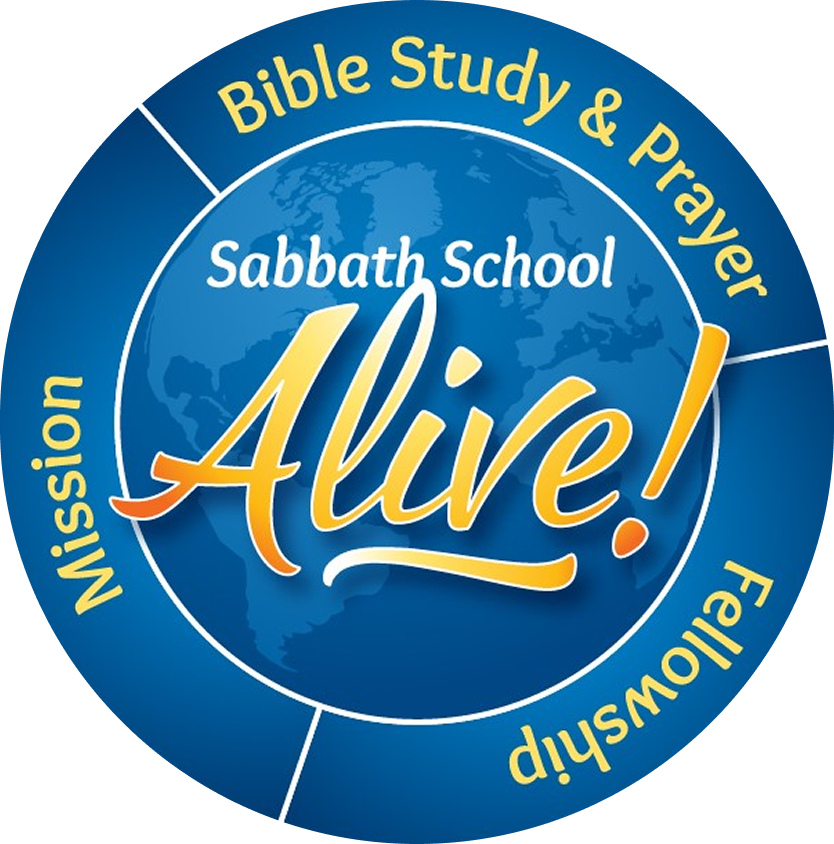
Revive Your Sabbath School!
People are drawn to churches that have vibrant Sabbath Schools. Churches grow when Sabbath Schools are made attractive and missional. It is still true today, "The influence growing out of Sabbath school work should improve and enlarge the church" (Counsels on Sabbath School Work, p. 9). Even in places where Sabbath School is declining, God can inspire you with ideas to revive your Sabbath School!

Bible Study & Prayer
The foundation of Sabbath School is the study of God’s Word. The Word is what gives power to Sabbath School. Teachers should base their instruction on the Bible and should encourage students to dig deep to understand the Bible for themselves. The Word should be approached with humility and dependence on God through prayer. “Never should the Bible be studied without prayer” (Steps to Christ, p. 91). Emphasize the importance of personal and intercessory prayer.
Fellowship
The format of Sabbath School promotes fellowship. Sabbath School is for teaching, not preaching. Sabbath School time should promote discussion and interaction. Outside of class time, classes can deepen their friendships when they meet together for social activities and group outreach. A spirit of care and concern will grow in classes that minister, through visitation and reclamation ministries, to those who are inactive or going through difficulties.
Mission
The focus of Sabbath School is the mission of making disciples, both locally and globally. Churches should conduct a vibrant mission program, separate from the class study. The mission focus should include world mission updates that give insight into the struggles and successes of God's work in other cultures and settings. Sabbath Schools should promote a spirit of sacrifice by inviting members to give financially to support mission projects in other parts of the world. A strong mission program helps members feel more connected to their global church family. Sabbath Schools should also recapture the evangelistic purpose of Sabbath School by giving strong emphasis to local outreach, providing personal ministries training, sharing local outreach reports, and highlighting encouraging testimonies. Members will get excited about adopting a quarterly local mission project for outreach or member care. Use 10-15 minutes each week to pray, plan, and report on Total Member Involvement.
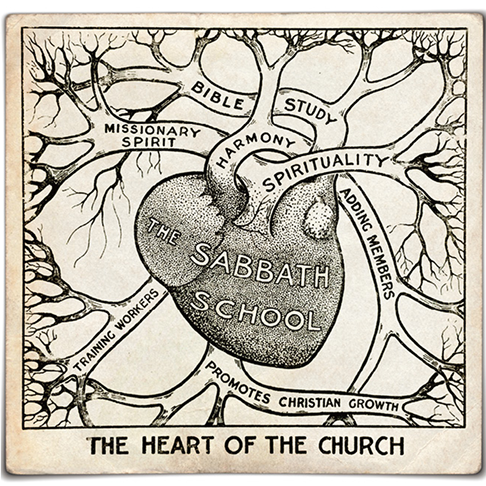
The Heartbeat of the Church
A Sabbath School that forgets its purpose is a dying Sabbath School. A dying Sabbath School is a place where you find prayerless sermonizing, no interaction, and an inward focus. When these things happen, Sabbath School becomes a burden on the church rather than lifting the church up. By bringing the purpose of Sabbath School back into focus, Sabbath Schools can be the heartbeat of the church. "From children we as Seventh-day Adventists have been told that the Sabbath School is the heart of the church, and so it is" (Robert H. Pierson, former General Conference President, The British West Indies Visitor, June, 1948).
Some diagnostic questions to know if your Sabbath School is alive or dying:
- Is the Bible the focus of the class study?
- Does the teacher make Bible truth clear and interesting?
- Is the class interactive—discussion and questions?
- Do members invite non-members?
- Does the teacher get to know the attendees?
- Does the class engage in outreach?
- Is Sabbath School part of the church's growth strategy?
The Model of the Early Church:

The power of Sabbath School is realized when we follow the divine model for true discipleship—Bible study and prayer, fellowship, and mission. This was the model established by the early church. The story of Acts 2 emphasizes the importance of each area. First, the apostles were driven by mission. “Then those who gladly received his word were baptized; and that day about three thousand souls were added to them.(Acts 2:41).These early believers were held together by the apostles’ doctrinal
teachings and fellowship. “And they continued steadfastly in the apostles’ doctrine and fellowship, in the breaking of bread, and in prayers(Acts 2:42).Doctrinal learning from the Bible and fellowship were essential in the early church. The purpose of Sabbath School is to blend the key ingredients of the early church—mission, doctrinal learning, and fellowship. Sabbath Schools that are vibrant and alive are strong in each area, creating a place where lives are changed, where people find belonging, and where people grow in Christ.
The early church was born for mission. Every member was a disciple (i.e. Acts 6:2; 11:26; 14:21), which means a disciple-maker by definition. And every disciple was a preacher (Acts 8:1, 4), not always in the sense of preaching to large crowds, but in the sense of preaching to one individual at a time (Acts 8:35). The early church multiplied through total member involvement. Sabbath Schools flourish when they become action units that train and equip members for local outreach as well as emphasize cross- cultural missions from around the world.
The early church was defined by doctrine. Doctrine means teaching. People who are leery of doctrinal teaching would not have felt comfortable when the church started. The early church never separated doctrine from Jesus. Today, it’s important that Adventists resist the temptation to separate the Jesus of the gospels from the Jesus of Revelation. The Adventist church must preach and teach the Jesus of the whole Bible. Our mission is dead unless we are committed to reviving and restoring the Christ-centered doctrinal teachings of the apostles in every Sabbath School and in every church service every week. A Sabbath School without a strong culture of prayer and Bible study is just a social club. More than ever before, Sabbath Schools need to be known for their in-depth study of the Scriptures.
The early church was held together by fellowship. Fellowship—it wouldn’t have been the early church without it. They ate together, spent time together, and wrote letters to each other when apart. Perhaps Adventists have too often considered fellowship optional. Just as it is the mission of God’s end-time remnant to restore the doctrines of the apostles, so the mission of God’s remnant must include reviving the rich, close fellowship of the early church. The format of Sabbath School promotes fellowship.
In Revelation 12:17, God promises that He will have a remnant people who are cut from the same cloth as the early church—people who revive the spirit and vitality of the early church. May the mission, doctrine, and fellowship of the early church be realized again in Sabbath Schools across the world today!