
History of Sabbath School
The history of Sabbath School is the story of people from different generations and different cultures who cherished their efforts in bringing people together around Bible study and mission. For over 170 years, Sabbath School classes have connected people locally and globally who share a common desire for in-depth study of the Bible.

Key Dates:
| Year | Event |
|---|---|
| 1852 | James White wrote the first Sabbath School lessons and published them in Youth's Instructor to help children. |
| 1853 | In Rochester, New York, James White established the first regular Sabbath School. |
| 1861 | Uriah Smith authors 32 prophetic Bible studies for adult Sabbath Schools. |
| 1869 | Goodloe Harper Bell became editor of Youth's Instructor and began publishing separate lessons for children and youth. |
| 1877 | The first state Sabbath School Associations formed in California and Michigan. |
| 1878 | The General Sabbath School Association organized. |
| 1885 | Adopted Sabbath Schools collect the first mission offerings. |
| 1886 | The first Kindergarten Sabbath School begins location Battle Creek, Michigan. |
The Early Years
Adventist Sabbath School work, the general equivalent of Sunday schools of other denominations, began in 1852 when James White wrote the first Sabbath School lessons to help children and youth. The series begun by White consisted of 19 Sabbath School lessons that were published in the first edition of the Youth's Instructor In 1853, 17 lessons on Daniel from a publication of J.V.Himes, another early Millerite preacher, were used. Thesewere followed by eight lessons on the sanctuary doctrine. In 1854 R.H. Cottrell prepared a one year set of lessons inbook form, entitled The Bible Class. William Higley wrote aseries of lessons on Daniel in 1859. No new lesson appeareduntil 1861 when Uriah Smith authored a series of 32 lessonsfor adults, again dealing with biblical prophecy.
A Sabbath-keeping former Millerite preacher and one of the founders of the Seventh-day Adventist church, White organized the first regular Sabbath School around 1853 in Rochester, New York; another was organized by John Byington in Buck’s Bridge, New York in 1854; and the third was organized in 1855 by M. G. Kellogg in Battle Greek, Michigan. Early Sabbath Schools had only two divisions, one for children and one for adults, called the Bible Class. Teachers placed much emphasis on the memorization of
Early Adventists continued to care for the Bible education of children in Sabbath School. In 1863 Adelia Patten wrote a new two-year series of lessons for children. From 1864 through 1888 children’s lessons appeared in the Youth’s Instructor, most built around biblical history and narrative Bible stories.
In 1869, Goodloe Harper Bell , a pioneer teacher in Battle Creek, became editor of the Youth’s Instructor. He introduced two series of lessons, one for children and the other for youth. He wrote the series of lessons for youth based on the book of Daniel. These were eventually published in eight yearly volumes and were used for 25 years. During the years 1864 through 1888 youth lessons appeared regularly in the Youth’s Instructor. For some time, the lessons surveyed the biblical history of both the Old and New Testaments. Later, the focus shifted to studies on doctrines under the title “Important Bible Subjects,” and dealt with the doctrine of the sanctuary, the covenants, the Sabbath, and related Seventh-day Adventist
G. H. Bell also published a plan of Sabbath School organization providing for a staff of officers and regular reports of attendance. He later introduced articles for teachers and officers. After demonstrating success in Battle Creek, Bell traveled to other places organizing Sabbath Schools and counseling officers.
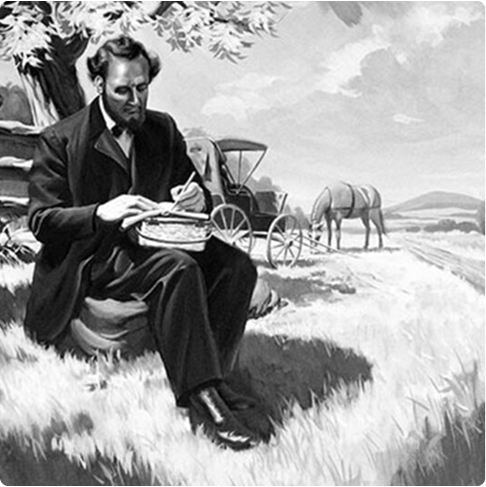
James White
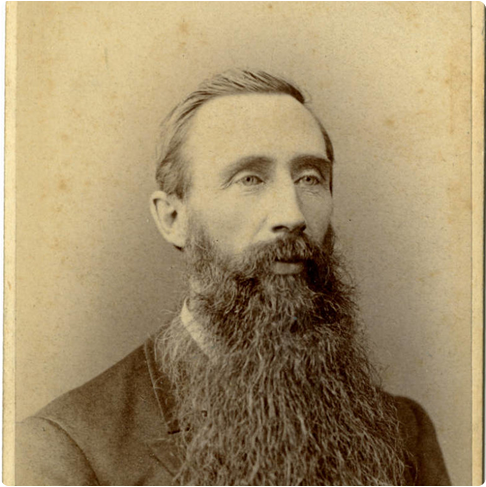
Goodloe Harper Bell
Getting Established
Organization of Sabbath Schools began in California in 1877 with the formation of the first state Sabbath School Association. The formation of this society was followed in the same year by the organization of the Michigan State Sabbath School Association. In March 1878 the General Sabbath School Association was organized. The first association outside North America was formed in Switzerland in 1883 and another in England in 1886. The name of the General Sabbath School Association was changed to the International Sabbath School Association in 1886 and three years later, translation and publication began in other languages, starting with Danish, Swedish, French, and German.
The Adult Bible Study Guide
In 1886 a series of lessons designed for adults began publication. These became the Senior Sabbath School Lesson Quarterly in 1889. In 1973 the name was changed to Adult Sabbath School Lessons, and in 1996 to Adult Bible Study Guides. The history of adult Sabbath School lesson titles and topics demonstrate our church’s commitment to in-depth Bible study. Each lesson since 1888 can be accessed online. Recent lessons are conveniently archived on the Adult Bible Study Guide website and older lessons can be accessed online through the Office of Archives, Statistics and Research Today, the Adult Bible Study Guide is produced by the General Conference Sabbath School Personal Ministries Department and translated into 138 languages.
Cradle Roll, Kindergarten, Primary, and Junior
In 1878, in Battle Creek, Michigan, the first division for smaller children was formed called “The Bird’s Nest.” In 1886 this became the Kindergarten division. In 1890 Our Little Friend began carrying the Sabbath School lessons for children. It has continued publication to this day. Sabbath School quarterlies for primary and junior ages were started in Australia in 1911-1913 and soon expanded to include the rest of the English-speaking world. From 1933 to 1936 a series of five volumes called Bible Stories for the Cradle Roll appeared. Other curriculum materials for children appeared periodically, both from the General Conference Sabbath School Department and from active teachers and personnel in local Sabbath Schools around the world.
Sabbath School Personal Ministries Department
When the General Conference was reorganized in 1901, the International Sabbath School Association became the Sabbath School Department of the General Conference. A major reorganization of the Sabbath School Department took place at the 1985 General Conference session when it became a part of the newly created Church Ministries Department. At the 1995 General Conference session, the Church Ministries Department was dissolved, and the Sabbath school department was reestablished in combination with Personal Ministries. Today it is known as the Sabbath School Personal Ministries Department of the General Conference of Seventh-day Adventists.
Teacher Training
In 1885 the Sabbath School Worker, a journal of instructions and ideas for Sabbath School personnel, began. It was published until 1985, when it was replaced by various other journals sponsored by the Church Ministries Department. From its beginnings, the Sabbath School Department has offered teacher training to Sabbath School teachers around the world.
Expanding and Improving
Following the example of the pioneers of Sabbath School, the church continued to develop and improve the best Bible study resources for Sabbath School students of all ages.
Young Adults
In 1979 students and faculty from Union College in Nebraska published Collegiate Quarterly (CQ), the church’s first Sabbath School lesson designed for college students. Other Adventist university campuses in North America soon joined with Union in writing and editing. In 1982 CQ went international when students from Hong Kong Adventist College began participating. Four decades after its launch, the Sabbath School Personal Ministries Department redesigned the young adult study guides in 2019 and gave it a new name: inVerse According to a 2024 survey, inVerse has readers in at least 73 countries around the world.
GraceLink
In the 1990’s the world church recognized the need to provide a new multi-level children’s Sabbath School curriculum that could be used in all parts of the world field. In 1996 Sabbath School and Children’s Ministry leaders from around the world began collaborating together to produce GraceLink a new Adventist curriculum for children. The first level was released in 1999 when PowerPoints became available for juniors and earliteens followed by GraceLink Beginners, Kindergarten, and Primary over the next several years. GraceLink curriculum would continue to serve the church for over twenty years. In 2004 RealTime Faith was added as new lesson study for earliteens.
Alive in Jesus
In 2025 the Sabbath School Personal Ministries of the General Conference released the first two levels (babies and beginners) of a brand-new children’s Sabbath School curriculum that seeks to nurture the spiritual life of our children and youth from the time they are babies until they are 18 years of age. The Alive in Jesus curriculum introduces children and youth to Jesus by bringing the wonderful stories and lessons of the Bible (including a clear Seventh-day Adventist worldview and the 28 fundamental beliefs) into our lives. This curriculum includes thousands of new pieces of original artwork, new music, podcasts, online content, and other media for teachers, parents, and children.
Sabbath School Mission Offerings
Weekly and special periodic offerings for the worldwide missionary work of the church and the expense offering for the local Sabbath School are received in Sabbath School. The earliest plan for Sabbath School offerings was introduced in 1878, when the first annual session of the General Sabbath School Association urged the use of penny boxes placed near the door to receive funds for operating expense.
In 1885 the Sabbath Schools made their first gifts to missions. In the first quarter of that year the Oakland, California, Sabbath School gave all its income to aid in the establishment of the Australian Mission. Several state Sabbath School associations proposed sending part of their offerings to help establish this mission. In 1887, the General Association asked all the Sabbath Schools to give their offerings to help establish the first Seventh-day Adventist mission station in Africa. This was the beginning of an ever-increasing stream of financial support that has flowed from the Sabbath Schools to the world fields.
In 1890 the Sabbath Schools contributed a significant amount of money to build the missionary ship Pitcairn When the Pitcairn sailed with its first missionaries to the Pacific islands in 1890, a new era in Sabbath School mission offerings began. In 1909 it was recommended that all the regular contributions, except on one or two Sabbaths in the quarter reserved for expenses, be given to worldwide mission work. Goals and devices to record the amounts were introduced to stimulate the mission offerings. By 1913 all regular Sabbath School offerings were going for missions and a special offering was taken for expenses.
With the establishment of the Church Ministries Department in 1985, the responsibility for Sabbath School offerings passed to the Stewardship Department of the General Conference, though they remained part of the regular Sabbath School program. Later, the General Conference treasury assumed the responsibility. Currently, the Office of Mission Awareness at the General Conference is responsible for the world-wide Sabbath School offering system. These offerings, nevertheless, remain part of the weekly Sabbath School program in local churches.
Today, Sabbath School continues to be a strong engine for mission offerings. See our Sabbath School Mission Offerings page to understand where Sabbath School offerings go today.
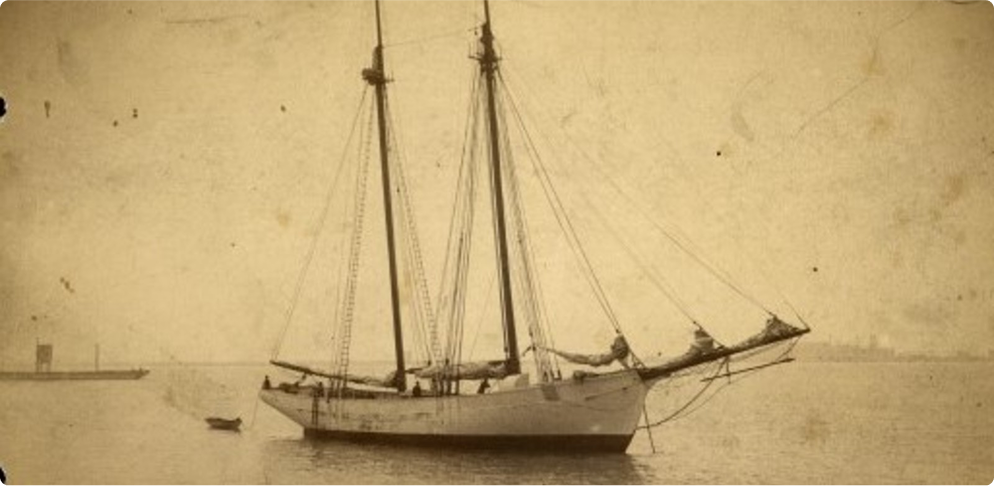
Pitcairn
The Purpose of Sabbath School
Originally, the purpose of Sabbath School was to provide a systematic plan for Bible study, especially for the training of youth. By the end of the 19th century, Sabbath School clearly took on a larger purpose. As early as 1883, Ellen White recommended wrote, “The Sabbath-school is an important branch of missionary work.” Two years later she wrote, “The Sabbath-school should be one of the greatest instrumentalities, and the most effectual, in bringing souls to Christ.” She also wrote, “The object of Sabbath-school work should be the ingathering of souls.” Ellen White strongly advocated for Sabbath Schools embracing a more comprehensive purpose.
With a strong focus on mission and outreach, Sabbath School work grew and prospered in the early 20th century. The work was blessed by the incredible talent and dedication of Flora Plummer who became the longest serving director of the General Conference Sabbath School Department, serving faithfully from 1913 to 1936. She was a prolific writer who produced many Sabbath School lessons for all ages, edited the monthly publication The Sabbath School Worker, and authored a number of important books to help train Sabbath School workers. Her books include From Acorn to Oak: A History of the Seventh-day Adventist Sabbath School Work, The Soul-Winning Sabbath School, The Soul-Winning Teacher, and The Spirit of the Teacher. At the 1922 General Conference, Plummer arranged for a special well-lit room to be setup with beautiful displays of various charts and diagrams that emphasized the purpose of Sabbath School. One of these displays was titled “The heart of the church. ” This picture featured a red heart with “Sabbath School” written over it. The heart was connected to a large set of arteries and veins that were titled “Bible study,” “spirituality,” “promotes Christian growth,” “harmony,” “missionary spirit,” “training workers,” and “adding members.” To this day, “the heart of the church” is a popular expression describing the importance of Sabbath School.
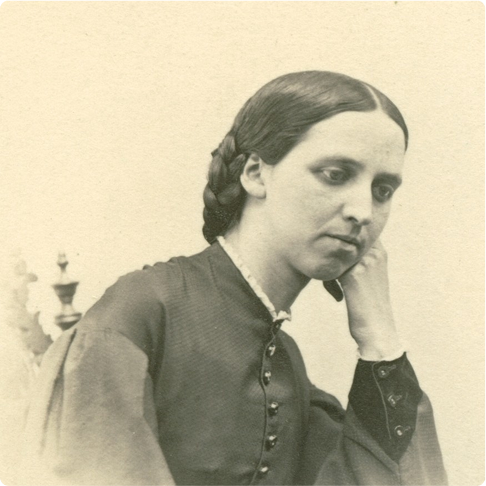
Flora Plummer
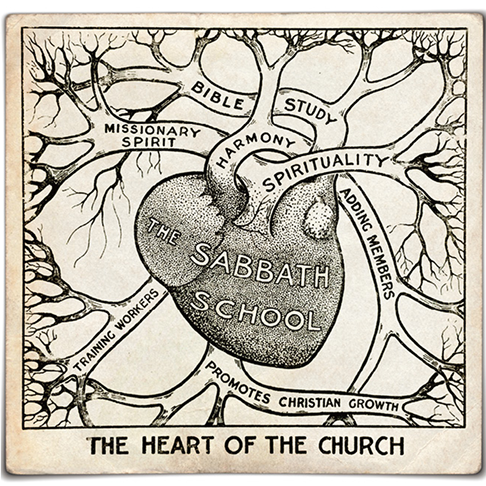
The heart of the church
During this time of explosive church growth, the Sabbath School was the driving force behind church planting and establishing new believers in the faith. In 1932, one writer in Ministry magazine observed that “fully 70 percent of our organized churches were first developed as Sabbath schools.” The same author writes, “It is stated that 85 percent of church membership comes directly from the Sabbath school.”
In 1974 the church restudied the purpose of Sabbath School and concluded that Sabbath School was undergirded by four main emphases: faith emphasis, fellowship emphasis, community emphasis, and world emphasis. These would be adjusted and incorporated into the church manual as four purposes of Sabbath School: “study of the Scripture, fellowship, community outreach, and world mission emphasis.”
The world church currently uses Sabbath School Alive! as a strategy to train and equip Sabbath School teachers around the world to be strong in Bible study and prayer, fellowship, and missions. When each of these areas of Sabbath is emphasized carefully, Sabbath Schools have a vibrancy that bring life to the whole church.
Other Sabbath School History Resources:
From SDA Encyclopedia:
"Sabbath School Personal Ministries Department, General Conference of Seventh-day Adventists"
by Jonathan Oey Kuntaraf
The Review and Herald, July 10, 1883
The Review and Herald, August 13, 1885
Sabbath-School Worker, January 1, 1892
“The Heart of the Church” (illustration), Sabbath-School Worker, June 1922, 162.
Louis Dickson, Sabbath School Evangelism” Ministry, October 1932, 18