Where Do My Sabbath School Offerings Go?
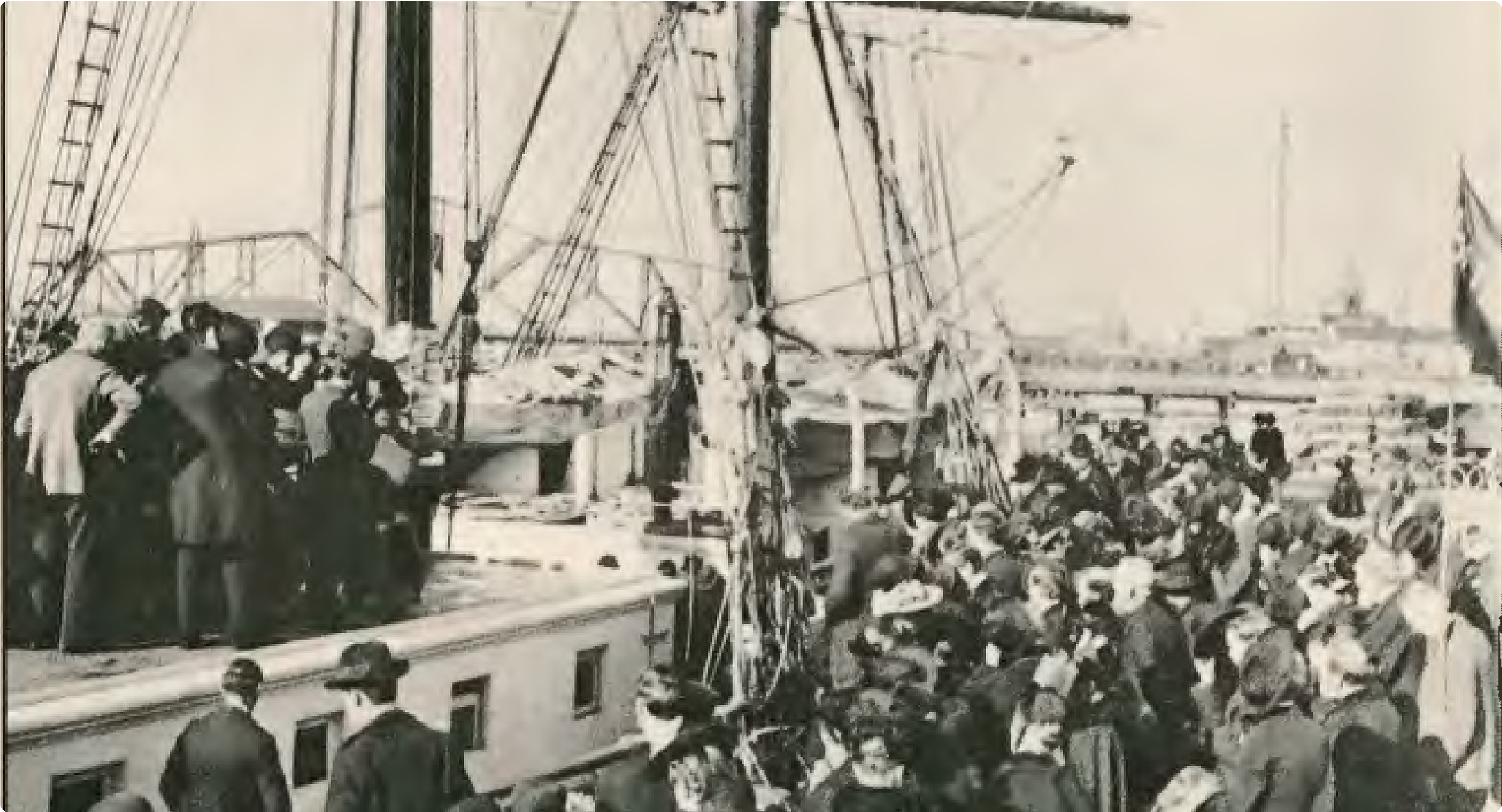
In 1890, the Adventist Church’s first mission offering helped build the ship Pitcairn, which carried three missionary couples to Pitcairn Island. Not only were 82 people baptized and one church formed, but the mission ship continued sailing and evangelizing the South Pacific. Although the results of this offering were amazing, its preliminary work was just as inspiring. In six months, about $20,000 USD was raised by adults and children through Sabbath School offerings. Adjusted for inflation, that would be more than a half million US dollars today. Since the early days of our church, local congregations have pooled their sacrificial resources together to see large results and increases for the work. Today the church has a long history of frontline mission projects made possible through mission offerings. Sabbath School mission offerings continue to be an integral part of mission funding. So, where do mission offerings collected in Sabbath School go? The answer to that question depends on which part of world you are in. Not every part of the world uses the same giving plan. There are three distinct offering plans used by the world church:
Combined Offering Plan
Adventist churches in the following divisions of the world church use the Combined Offering Plan: East-Central Africa, Euro-Asia, Inter-American, Northern Asia-Pacific, South American, Southern Africa-Indian Ocean, Southern-Asia Pacific, Southern Asia, West-Central Africa, and parts of the South Pacific Division (islands only) and Inter-European Division (Portugal and Spain). In these areas of the world, the offerings collected in Sabbath School are added into the same pool as the offerings collected during the church service. These funds are used to support every level of the church both locally and globally. The money is distributed according to a formula that is voted by the division. 50-60% is retained for the local church. 20-30% supports regional mission projects of the conference, union and division. 20% goes the General Conference for the World Mission Fund (known as World Budget in North America). The World Mission Fund supports mission projects around the world including the Quarterly Mission Project (also known as the 13 th Sabbath Offering). This distribution model helps maintain a balanced approach to funding local, regional, and global mission efforts equitably.
Calendar of Offerings
Adventist churches in the following territories use the Calendar of Offerings: Euro-Asia Division, Trans-European Division, most of the Inter-European Division, Middle East and North Africa Union Mission, Israel Field, Australia and New Zealand. In this plan all the offerings collected in Sabbath School go to the General Conference for world mission. Unless otherwise noted on a tithe and offering envelope, offerings collected during the church service go to a specific area. For 26 Sabbaths of the year, the offering collected is for the local church. On other Sabbaths, offerings will be collected for the division, the conference/union, or special projects named in the yearly Calendar of Offerings.
Personal Giving Plan
Adventist churches in the North America Division use the Personal Giving Plan. This plan suggests that each member give 3-5% of their income to Local Church Budget, 1-2% to Conference Advance, and 1-3% to World Budget (also known as World Mission Fund). Money that is collected during Sabbath School normally goes to World Budget. Birthday and Thank Offerings also go to World Budget. Thirteenth Sabbath Offerings are divided with 25% of the offering going to the special project featured on the back of the mission quarterly and the remaining 75% going to World Budget. Investment Offerings are also divided with 25% going to special mission projects within the North American Division and the remaining 75% going to World Budget.
The General Conference and its divisions oversee the World Mission Fund (World Budget) and use the resources to help fund projects around the world that need support. Without this fund, many of the mission fields would not be what they are today.
Local Sabbath School classes can also make missional impacts of their own. Sabbath School classes have been known to provide and serve food for local homeless shelters, but also distributing Bibles, equipment, and technology in foreign fields. Sabbath Schools have also built churches, supported the religiously persecuted, and funded various Gospel workers.
Churches that promote cross-cultural missions and encourage members to give sacrificially are strengthening God’s work, not only globally, but also locally.
“The home missionary work will be farther advanced in every way when a more liberal, self-denying, self-sacrificing spirit is manifested for the prosperity of foreign missions; for the prosperity of the home work depends largely, under God, upon the reflex influence of the evangelical work done in countries afar off.”
Ellen G. White, Testimonies to the Church, vol. 6, p. 27
In the spirit of the Pitcairn, Sabbath Schools who prioritize missions can accomplish great results for the expansion of God’s work in our world today. Check out the resources below to learn more: